

While people often fear root canal therapy, many of these concerns are based on misconceptions. When properly performed and paired with good oral hygiene, root canal treatment in Delray Beach and Boynton Beach, FL, is a long-lasting solution for preserving dental health.
The term root canal refers to the inner narrow passages that extend from the pulp chamber through the roots of the tooth that contain nerves, blood vessels, and connective tissue. If this area becomes infected or damaged due to decay or trauma, a root canal at Care One Dental is used to remove the impacted tissue and restore the tooth.
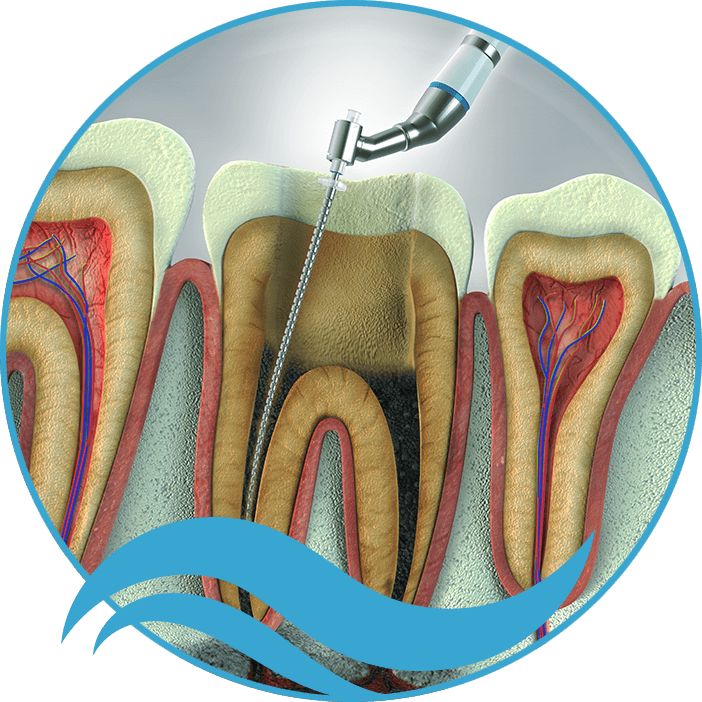
The goal of endodontic treatment at Care One Dental is to save the natural tooth from extraction. After local anesthesia and or sedation have taken effect, a small opening is drilled in the top of your tooth. Then the infected or damaged pulp is removed from the pulp chamber and the root canals.
After removing any remaining bacteria and debris, we fill and seal the area with a temporary or permanent filling. A dental crown is typically required after healing to strengthen and protect the tooth.


Preserving your natural teeth should always be the priority when treating dental conditions. Replacing a missing tooth with dental implants or bridges is more expensive and time-consuming than a root canal procedure.
No, the truth is a root canal relieves pain caused by infected or inflamed dental pulp. With modern techniques, the procedure itself is relatively painless, especially with local anesthesia.
In the past, this procedure may have required multiple appointments to complete treatment. Today, root canal therapy in Delray Beach and Boynton Beach, FL can now be completed in just one or two visits.
Root canals have a high success rate, with about 90-95% lasting a lifetime or many years. Failure affects fewer than 10% of cases and is usually due to missed complex canals, persistent infection, or fractures.
When a standard root canal fails to resolve persistent infection or pain at the tooth root tip, an endodontic surgical procedure called an apicoectomy can often save the tooth.